Hi, im Ed and this blog is for my notes and findings in my A-level MediaStudies course. I'll be looking at Structural theorists, representation and symbols in the media.
Tzvetan Todorov was a Bulgarian-French historian, philosopher, structuralist literary critic, sociologist and essayist and geologist. He studied classic fairy tales, stories and fables and developed his theory on narrative from them. His theory suggests that they, and many texts all follow a very similar formula for their narrative: EQUILIBRIUM: The given state or balance of affairs before the.. DISRUPTION: Disruption of the equilibrium (may stem from a catalyst such as an antagonist) RECOGNITION:There is disruption -probably now recognised by protagonist RESOLUTION: The attempts to restore the equilibrium
EQUILIBRIUM: Restoration of a similar or changed state of affairs after the disruption has been resolved
In Humans this does take place however there are some changes. Firstly a fragmented narrative is used (part of Baudrillard's Postmodernism theory) with features such as flash backs and multiple narratives taking place at once. Furthermore the formula shown takes place however, often as used as profitable technique, the equilibrium at the end is not restored. Often things are 'teased' or hinted at draw the audience in wanting to find this equilibrium in the following episodes. An example of this is shown in Humans where although the family have reached a state of peace with Anita's presence (equilibrium) she then does the unexpected and walks away holding the younger child.
Convergence: Moving towards union, coming closer together and a meeting at a point Technological convergence: Technological advancing, merging and intergrating
"[Technological convergence] makes it increasingly difficult for governments to implement media and communications policies based on shared national values and aimed at delivering social cultural policies" - Livingstone and Lunt
Prosumer: a producer-consumer
"What do citizens need from the media and how can this be guaranteed? Who ensures that converging communications technologies serve the public interest? Do we even know what the public needs or wants? Can a single organisation balance industry and consumer demands in regulating media and communications?" - Livingstone and Lunt
Professor David Hesmondhalgh is a cultural industries theorist. Cultural industries are the industries that focus on the production of culture.
Synergy: The combined collaboration of two or more parts of a system so that the combined effect is greater than the effort of one of the parts alone.
Vertical Integration: Synergy through two or more stages of a production. E.g: 20th Century Fox owns the studios in Hollywood but they also own the cinemas where the films are shown.
Horizontal Integration: Synergy between subsides at the same stage of productions. E.g: Although Instagram is very similar to Facebook, Facebook owns Instagram
The media provides us as a audience with 'tools' to help us construct our identities.
-Colonial discourse continue to inform contemporary attitudes to race and ethnicity in the postcolonial era.
-Civilization constructs racial hierarchies and sets up binary opposites based on notions of otherness.
The British Empire
-At it's height, it was the largest empire in history and, for over over a century, was the foremost global power.
-By 1913, the British Empire held sway over 412 million people-23% of the world's population(1913)
-By 1920, it covered 13,700,000 square miles, 24% of the earth's total land area.
Colonialism
The policy or practice of acquiring full political control over another country, occupying it with settlers, and exploiting it economically.
The Target of the imperial impulse is the immigrant. To implement the origin country's attitudes -ethnicity, attitudes, representation, class etc
"Albion's criminalization of immigrant and their progeny particularly from the Caribbean and South Asia signifies a melancholic response to these social and political groups that are essential to late modern British life." - Paul Gilroy Discourse
= discussion, debate, exchange of ideas.
"It is important to ask what critical perspectives might nurture the ability and the desire to live with difference on an increasingly divided but also conversions on the planet" - Paul Gilroy
Colonialism
=Fully of partially controlling, occupying and exploiting another country.
"the imperial and colonial past continues to shape political life in the overdeveloped-but-no-imperial countries." - Pail Gilroy
Egocentricity
=Belief that your ethnic group is superior.
The following advert is an appeal from the charity Water Aid who go to some of the world's poorest and most marginalized communities to install wells to provide said communities with water.
Claudia
-Clothing: Skirt, polo shirt and shoes -rather western style look
-Wide shots of the path show how vulnerable she is as a child. The close ups brings the audiences attention solely on her, one person is much easier to identify with rather than a group.
Stuart Hall- Representation
-Deliberately broken away from traditional/stereotypical charity advert (social context) - No depressing narration, no shots of children drinking dirty water, some crops are shown, Claudia does wear decent western clothing etc. The use of lots of close up camera shots makes it direct and personal while also allowing us to recognize this as every day life for her. She also never directly addresses the audience or look at the camera making her seam very lonely while she sings to her self.
-Shared conceptual road map; Typical African landscape with really unsaturated and beige colors, dry plants,
-Binary Opposites:
UK vs Africa -lush dark green Fertile ; Dead, Dusty, Dry crops -Developed; Underdeveloped
Beginning of advert and end -Single child; whole village - More saturation throughout
Sunshine vs Rainy day
Claudia's positive story vs on-screen graphic"650 million people still don't have access to clean drinking water" (conceptual binary)- concept of change
-Audience
The encoded meaning is very blatantly obvious to the audience -these people need water.
The use of covering Zoe's 'Sunshine on a rainy day' creates a target audience of 30s-40s as it has a nostalgic factor to the ad which will attract this age range who are likely to have a stable income compared to that of younger generations.
David Gauntlett - Theories of identity
The idea that media provides us with 'tools' or resources that we use to construct our identities.
-Claudia acts as a role model for the type of life style changes that the audience could be responsible for creating if they donate to water aid
Liebst Van Zoonen - Feminist theory
-Women - Washing, collecting water, looking after children ]-Reinforced stereotypes
-Men - working in fields/labor
Although the women are in stereotypical female roles, they do physical work by walking to collect water which does subvert stereotypes
Gilroy - Post Colonial Theories
-Water aid is encouraging it's British audience to 'help' those like Claudia who live in less developed countries
-'Sunshine on a rainy day' is from British culture and the meaning of the song makes sense in British social context, not African. 'Rain on a sunny day' makes more sense in African social context -Imposing of British values on African society doesn't work.
-Previous adverts have cultivated an impossible task with miserable and starving women and children of which audiences have become desensitised to. Water Aid has twisted this idea.
Audio Codes
dietetic sound on radio - typical British weather
SOUND BRIDGE -crickets from 2nd frame heard in 1st frame -smoother transition - links UK to Africa-money comes from UK which is sent to Africa
Claudia begins humming-intro + crunching of footsteps-dry
Singing has a contrast in accent to British Radio-childish voice although hard to distinguish age due to the fact she is on her own -suggests maturity
'Sunshine on a rainy day' -contrast in culture -view of sunshine
"Makes me feel like i belong" -water brings people together?
"Don't leave me here alone" -keep watching
"Sunshine on a rainy day"-happy children on screen - sunshine=happiness
Betty Friedan is considered to be one of the most important feminists throughout history, she sparked the second wave of feminism activists in the 1950s. Previously i have shown how society during the 1950s forced women into a demeaning lifestyle that had no end and no inspiration. Attitudes created by the patriarchal society of the 1950s mean't that women's lives were dedicated to marriage, raising a family and keeping there house clean and should set aside education and job ambitions. They were objectified and seen as an image. Betty Frieden questions this attitude in her book 'The Feminine Mystique', she presents the 'problem that has no name'. This problem is simple, the lives women were leading were unfulfilling and left much to be desired in the eyes of all women of the time. Although the media and attitudes showed women being content and happy with their lives, this was merely to keep women like Betty Frieden from speaking out.
The research for the Cultivation theory, theorises by George Gerbner, began in the mid 1960s and it's aim was to specifically look at how television and media effect and influence the audience' ideas and perceptions of everyday life.
-The main findings were that high frequency viewers (those who experience a lot of media and TV) are more susceptible to media messages and the beliefs that the messages are real and valid. These high frequency therefore have a 'model' created by the media of things such as violence in the world. Findings also suggested that the media's cultivated constructs are present in todays society and are re-presented but within different packaging e.g violence depicted by social media is also depicted by radio.
Some of attitudes studied included violence, gender, demographic, cultural representation and political attitudes. Low frequency viewers have less stereotypes and attitudes than high frequency viewers who's stereotypes and attitudes are all based on their experience of media. High frequency viewers are also more exposed to more violence and are then affected by the 'Mean World Syndrome' which is the belief cultivated by media that the world is a far worse place than it is in reality.
Limitations:
-One of the main principles of the theory is that television and media cultivate the status quo, they do not challenge it. This is no longer true as some media now try to challenge the status quo to promote equality.
-It focuses on TV and not other forms of media.
The Uses and Gratifications Theory is an approach to understanding why and how people actively seek out specific media to satisfy their specific needs. The following people are the theorists who helped create the modern day theory:
Herzog – 1944 – First started the theory based on previous research Jay Blulmer – 1969 – Built on Herzog's research Michael Gurevitch - 1973-1974 – Built on Herzog's research Elihu Katz – 1973 -1974 – Built on Herzog's resear
There are 5 key points/reasons why people have a psychological need for the media:
-To be informed or educated -Identify with characters of the situation in the media environment -Simple entertainment -Enhance social interaction -Escape from the stresses of daily life
Tide
The ad educates the audience on the product
The woman on the ad looks to be the typical 1950’s housewife, this allows housewives to identify with the ad
The ad provides a comic strip for simple entertainment which the audience could further identify with
The comic strip provides interaction with the product
It suggest unrealistic cleaning standards of perfect whitening
News
Companies that disperse news to the audience such as newspapers, news websites, magazines and TV programmes are successful because of the audience's need for information. This is part of the Uses and Gratification theory.
News companies will pick out certain stories that come across as 'extreme' or unusual. This is the producer playing on uses and gratification theory by creating 'click bate'
Reality TV
Another example of uses and gratification theory is reality TV. Reality TV provides the audience with a way of escaping the real world and immersing themselves in an idealized world which is staged by producers*. It is usually simple entertainment that the audience can identify.
* "All representation of people and places in any media product are constructions of reality, not reality itself." - Stuart Hall
Limitations of the Uses and Gratification Theory
Research implications are that Uses and Gratifications theory only has specific relevance to social media. Uses and gratifications theory helps explain the many and varied reasons why consumers use social media.
This advertisement advertises Tide - a laundry powder launched in 1946 - it was used throughout the 1950s and the advert has typical attributes of behavior of the time. Before WWII it was frowned upon for women to have jobs, however once WWII took place women alike were encouraged to work in factories that created rivets, bombs and other weapons. Rosie the Riveter contrasted with the post-war representation of women.
Once the war was over there was slit leeway for women to be employed, however, only "women's" jobs. Although it was still frowned upon at this time; women could work as teachers, receptionists and assistants but still attitudes withheld them from being successful. Also during this time, when soldiers returned, there was an instant baby boom. The combination of this and the "white flight" created the suburbs, a network of houses where families would live. Instead of employing women into jobs, society dictated that women should become housewives spending all day cleaning their house, looking after children and making sure they looked visually pretty for husbands and fathers. Tide's advert reflects these attitudes in this consumer culture. The women advertising the product creates unrealistic representations of women with perfect skin, make-up, hair and figure which has been created by society's attitudes.
Liesbet Van Zoonen was a feminist who fought against these attitudes and stereotypes. She pointed out that although women could eventually have the 'perfect' family and the 'perfect' house, there is still a 'hole' in there lives which isn't filled. The film 'Mona Lisa Smile' looks at this issue. It shows how these women in this society enjoyed an education and how they would like to go out into the world and have the same opportunities as men. Van Zoonen fought for a non-sexist society and for media to contribute to social change by representing women in non-traditional roles and using non-sexist language. She talks about this in her book "The Feminine Mystique" which has inspired many feminists thought it's publication.
Bell Hooks is another feminist who talks about how lighter skinned women were considered more desirable and fit better in western ideology of beauty. This is supported by the 'white flight' and is reinforced by the advert for Tide. It shows how the modern woman of the time was depicted as.
The target audience could be housewives and husbands. The advert appeals to housewives as it applies with the idea of 'Keeping up with the Joneses' as it is supposedly 'the next best thing' that the perfect woman that is depicted has it too. Husbands would also pick up that it is 'what women want' suggesting that it is the 'perfect' gift.
Uses and Gratification theory can be applied to the advert. The audience demographic demographic is constructed through the woman drawn. Women of the time are supposed to personally identify with her as future or current housewives who can identify the connotations given by the advert which will create the feeling that they have to buy the next best thing.
Stuart hall's reception theory can also be applied to Tide. The use of the woman being indirect to the audience connotes that he relationship with the Tide powder is of upmost importance further creating the sense of 'keeping up with the Jonses'. The dominant or hegemonic encoding of the advert's primary message and expectations is to be received by housewives.
This is idea can also be reflected in Cultivation theory- George Gerbner. Advertising developed significantly during the 1950s, in the late 1970s Gerbner commented on how these media texts affected audiences. Tide cultivates the idea that it is the best brand and that nothing cleans better or more is more desirable than Tide. Levi Strauss's Binary Opposites theory can be applied to the selling points on the page- 'cleanest' and 'whitest' instantly dissociates dirtiest and darkest to the cultivated audience.
Ronald Bathes's five codes are five ways of describing the meaning of a text in the media. He suggested that texts are either 'open' or 'closed'. If they are 'open it means that the meaning of the text is open to the audience and it can be interpreted in different ways, if it's closed then there is one clear meaning created by the producer.
Hermeneutic/Enigma code
The Hermeneutic code refers to mystery in the text, things such as clues and hints but the meaning isn't directly given. These enigmas in the narrative draw the audience into wanting to learn more about the product or the story. An example of this is at the end of 'Now you see me'; at the very end a stair case is shown through which forms the shape of an eye, this is located in the house that the organisation 'the eye' works under, this symbolizes said organisation.
Proairetic/Action code
The proairetic/action code refers to the building of interest and suspense on the part of the reader or viewer. It is created by having a narrative that could have a number of different outcomes. An example of this could be in Netflix's 'Stranger Things', in the very first episode of the series we see the character of Will taken by an alien-like creature. As the audience we have a need to see the outcome which influences us to watch until we are aware of the outcome of this.
Semantic code
The semantic code refers to meaning being conveyed through connotations of words and semantics. An example of this could be in trilogy of Star Wars, the antagonist is part of 'dark side' and as 'dark' has connotations of evil we as an audience can identify this with villainy and as being antagonistic.
Symbolic code
Symbolic language is very similar to Semantic code but overall is a "deeper" structural principle that organizes semantic meanings. An example of this is in Pulp Fiction; Samuel L Jackson's character Jules has memorized a quote from the Bible- Ezekiel 25:17, throughout the film he debates it's meaning and this changes his behavior, this symbolizes his conscience throughout the film.
Referential code
Referential code refers to to anything in the text which refers to an external body of knowledge such as scientific, historical and cultural knowledge. An example of this is in the last episode of Netflix's 'Breaking Bad'; the last episode's title is 'Felina' which when separated gives the chemical symbols for Iron (Fe), Lithium (Li) and Sodium (Na). These three elements are part of the chemicals that separately make up blood, meth and tears (refers to blood, sweat and tears however is appropriate for the program's genre and story line).
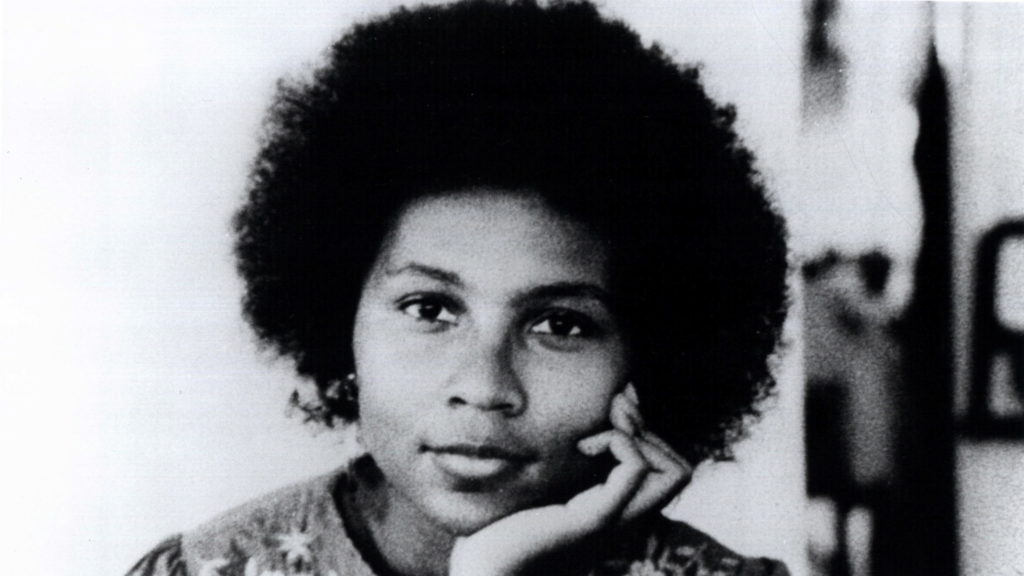
In Hook's book 'Reel to Real' she discusses how the media has effects over the audience even though we are aware that what's on screen isn't real life. She focuses on how it effects black female spectators and begins to speak from experience. She believes that to engage in film was to engage in the negation of black female representation in the media. She states "Representation is the 'hot' issue right now because it's a major realm of power for any system of domination" Gloria Jean Watkins, or better known as Bell Hooks is a African American feminist born on the 25th September 1952. She is influenced by figures such as Malcolm X, Martin Luther King and Toni Morrison. Noting a lack of diverse voices in popular feminist theory, bell hooks published the book Feminist Theory: From Margin to Center in 1984.
"Women in lower class and poor groups, particularly those who are non-white, would not have defined women's liberation as women gained social equality with men since they are continually reminded in their everyday lives that all women do not share a common social status." She believes that feminism is a struggle to end patriarchal oppression and the ideology of domination.She has a very strong belief that feminism is a political commitment rather than a lifestyle choice. She further believes that feminism is a struggle to end patriarchal oppression and the ideology of domination.
Leisbet Van Zoonen was born on the 1st of May 1959 in the Netherlands. She has many feminist theories which are published in her books: 'Entertaining the Citizen' and 'Feminist Media Studies'. She talks about how in a patriarchal society women are objectified and men are voyers.
Patriarchy=A male dominated society.
Matriarchy= A female dominated society.
"in western society to be looked at is the fate of women, while the act of looking is reserved to men. Even if women do the looking they do not seam to do it through their own eyes[...] a core element of western patriarchal culture is the display of women as a spectacle to be looked at, subjected to gaze the gaze of the (male) audience"
Hegemony= Leadership or dominance; who is 'in charge' - "a hegemonic society"
Discourse= Discussion, debate, exchange of ideas
"In feminist terminology media are thought to transmit sexist, patriarchal or capitalist values to contribute to the maintenance of social order"
Magazine construct many traditional representation of gender (in relation to domesticity, motherhood fashion and beauty for example) that relate specifically to the time and society in which they were produced.
Stuart McPhail Hall is a cultural theorist and political activist
All representation of people and places in any media product are constructions of reality, not reality itself.
Different media language codes influence the meanings created by an image. Being given extra context for cultural codes like facial expressions impacts on the representation comunicated to us.
“Producing meaning depends on the practice of interpretation and interpretation is sustained by us actively using the code”- Stuart Hall Stereotype= a widely held but fixed and over simplified image or idea of a particular type of person
Claude Lévi-Strauss (1908-2009) was a french anthropologist whose work helped develop the theory of structuralism and structural anthropology.
Structuralism = a method of interpretation and analysis of aspects of human cognitive, behaviour, culture and experience, which focuses on relationships of contrast between elements in a conceptual system.
Binary Opposites
One of Strauss's most famous theories is his theory of Binary Opposites. In the the mid 20th century, he and Roland Barthes came together and worked out the way we understand certain words does not depend on so much their meaning that they directly contain, but much more by their direct opposite as they call it 'binary opposites'. They stated that words simply act as symbols for society's ideas and that the meaning of words is a relationship rather than a fixed thing.
This idea can be applied to this 1950s Tide advert. Down the right hand side there are three paragraphs that have more factual information than the rest of the ad. The bold words is red are what Binary Opposites can be applied to. As an audience when we see 'cleanest' we instantly dissociate the binary opposite dirtiest, when we see 'Brightens' we instantly dissociate darkens and so forth.
Judith butler is an American philosopher and gender theorist. Her essay "Performative Acts and Gender Constitution" (1988) suggested that gender is performed and that it is someones's identification (based on social characteristics). She goes further to distinguish someone's sex and sexuality. A person's sex is there anatomy and a person's sexuality is their emotional, romantic or sexual attraction.
Gender as performance
Judith butler suggests that gender is performed based upon social constructionism, behaviour and characteristics represented in society and culture which can adapt and change.
'understand gender as a relation among socially constituted subjects in specifiable contexts'
–Judith Butler
There are certain behaviours, clothing items, hobbies, just to name a few, that were and perhaps still are gendered in modern society.
Subversive performances
The table (right) shows repeated performances of gender of time, nothing about gender is predetermined.
subvert= undermine the power and authority of (an established system or institution)
‘think through the possibility of subverting and displacing those naturalised and reified notions of gender that support masculine hegemony and heterosexist power, to make gender trouble’
–Judith Butler
Androgynous and effeminate are two terms that are very similar. They describe a performance which isn't of the 'typical' sex-gender. Madonna is an example of someone who is perhaps androgynous. she often dresses in suits which are usually worn and tailored to men. Effeminate is a term given to men who act with typical 'feminine' qualities rather than the typical masculine behaviour.
 Tzvetan Todorov was a Bulgarian-French historian, philosopher, structuralist literary critic, sociologist and essayist and geologist. He studied classic fairy tales, stories and fables and developed his theory on narrative from them. His theory suggests that they, and many texts all follow a very similar formula for their narrative: